
U-Value vs SHGC: How to Read a Window's Energy Numbers
Every window spec sheet and quote carries the same few numbers, and they are easy to misread. Two of them do most of the work: U-value, which describes heat leaving the building, and SHGC, which describes heat from the sun coming in. Get both right and the glass works with the building instead of against it.
U-value: heat going out
U-value measures how much heat passes through the glass for every degree of temperature difference between inside and outside. Lower is better. In an Ontario winter it is the number that decides comfort near the glass, condensation risk, and heating cost. More panes, Low-E coatings, argon fill, and warm-edge spacers all push it down. Check whether a figure is for the centre of glass or the whole window, because the whole-window number includes the frame and edge and is always higher.
SHGC: heat coming in
Solar Heat Gain Coefficient is the share of the sun's heat that gets through the glass, on a scale from 0 to 1. A unit with an SHGC of 0.25 admits a quarter of the solar heat falling on it. Lower is not automatically better. In winter, solar gain is free heat. In summer, it is load the air conditioning has to remove.
Orientation changes the answer
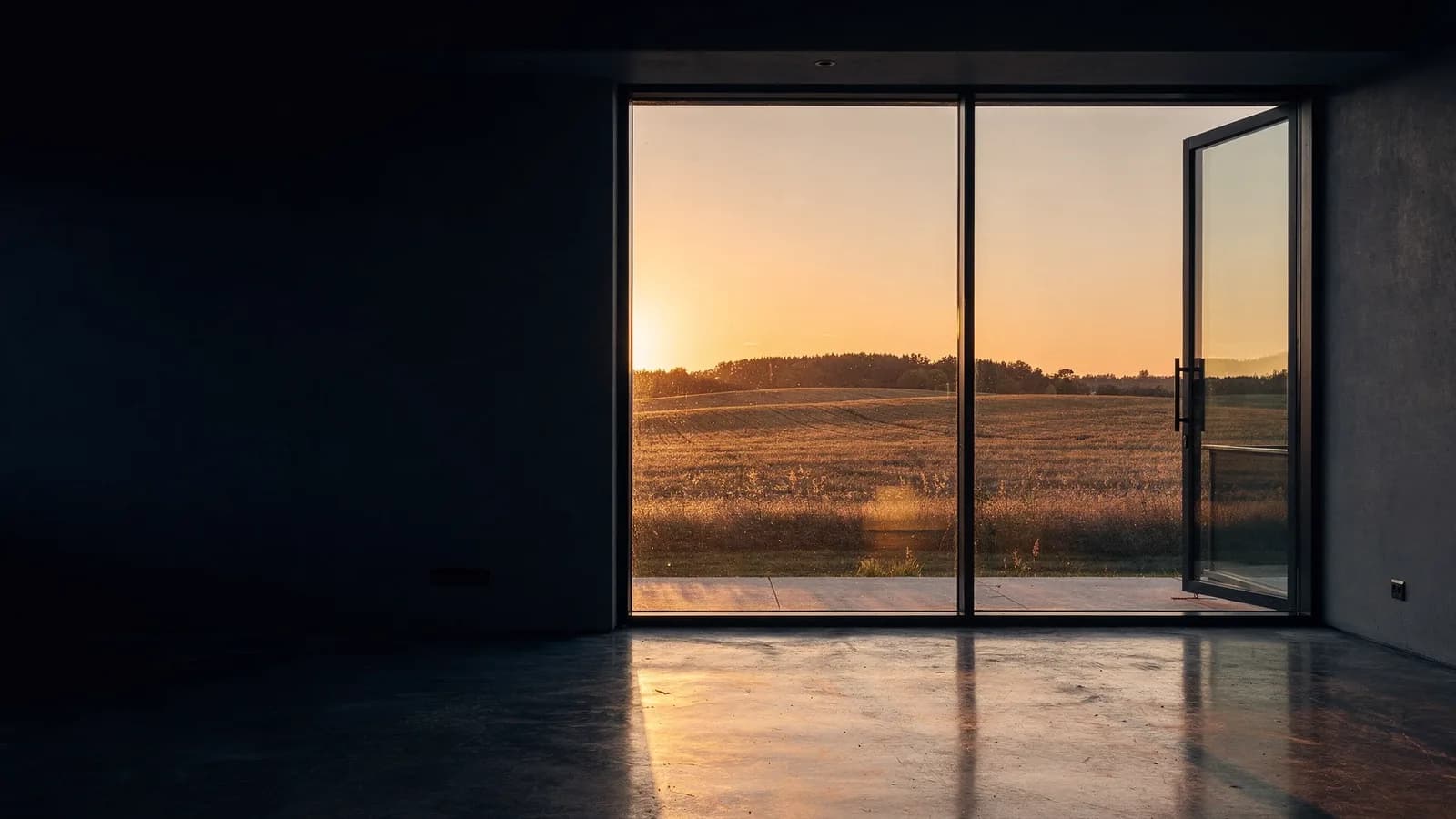
South-facing glass in Ontario can benefit from a higher SHGC, because the low winter sun brings in useful heat while overhangs shade the high summer sun. West-facing glass is the problem: it takes low, hot afternoon sun straight on, and a lower SHGC keeps rooms from overheating. Large glass walls, like the one in this photo, make the choice matter even more. Many projects use different Low-E coatings on different elevations for exactly this reason.
Don't forget visible light
Visible Transmittance (VT) is the third number worth checking. It tells you how much daylight gets through. Strong solar control coatings can cut daylight too, so compare VT alongside SHGC when you want bright rooms without the heat.
Getting the spec right
NAGC manufactures double, triple, and quad IGUs in Guelph with a choice of Low-E coatings, argon fill, and warm-edge spacers, with an average lead time of 5 to 7 business days. Send us your U-value and SHGC targets, or just the elevations, and we will recommend a makeup for each side of the building.
Sourcing glass for a project or production line?
Spec IGUs for your performance target